LIGHTING
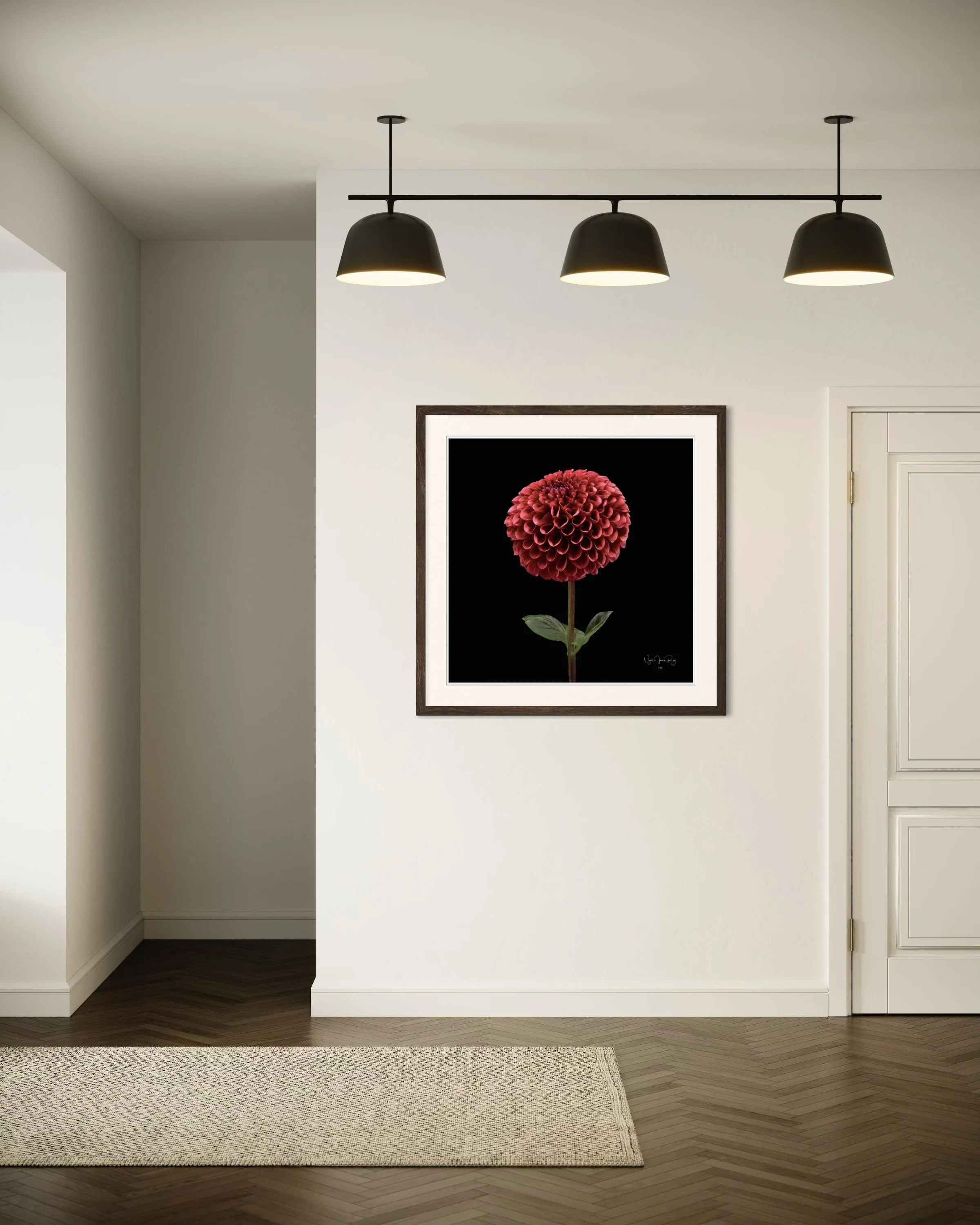
When your print is hung it will be illuminated by either natural or artificial light, or more likely a combination of the two. With this in mind, some of the following recommendations may prove useful.
Firstly, try to avoid positioning your artwork where it will receive either direct sunlight or bright light from a window or door. Damage from UV and infra-red emissions can occur over time without protective glazing. Similar emissions are also made by incandescent and fluorescent light installations and so you should try to avoid hanging your artwork too close to either light source. These basic rules apply to all artwork and not just mine. Also be aware that artificial light can influence how colours appear in your room. That influence is not limited to artwork and will include things like soft furnishings too. For example incandescent and tungsten bulbs emit a warm light that enhances yellows, oranges and reds. Fluorescent lighting on the other hand can make colours appear cooler by emphasising blues and greens.
Energy saving LEDs do not produce UV and infrared radiation but need to be of a high quality to show colours at their best. If you are installing or replacing LEDs within your room, hallway, or other space, then you may wish to consider full spectrum lights with a colour temperature of c. 6500K and a CRI (colour rendering index) of at least 96%. These values represent close to natural daylight or mid-day sun and show truer colours. You should take further advice in this regard and note the difference with so called “daylight bulbs” that often have a CRI of around only 80. Most full spectrum lights provide a brighter, whiter light for better colour rendering or accuracy. Not surprisingly, these type of LED lights are used by museums, galleries, and other professional installations.