finishing
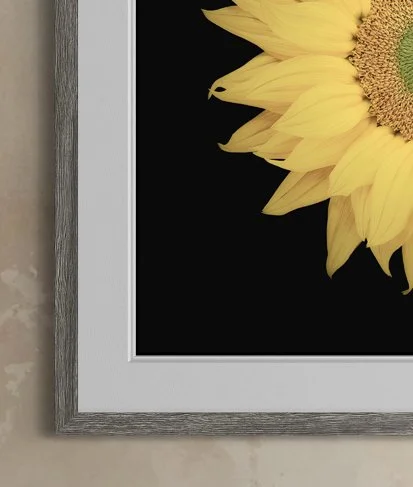
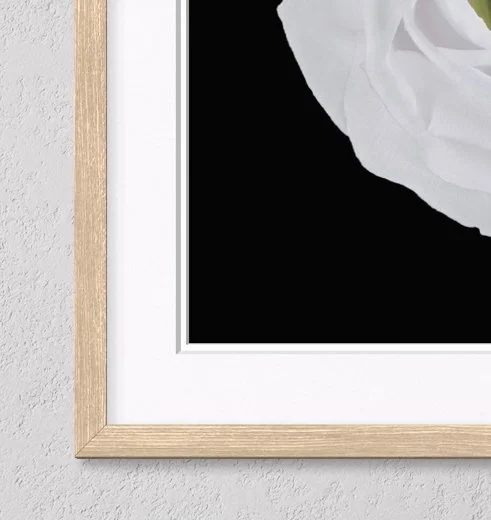
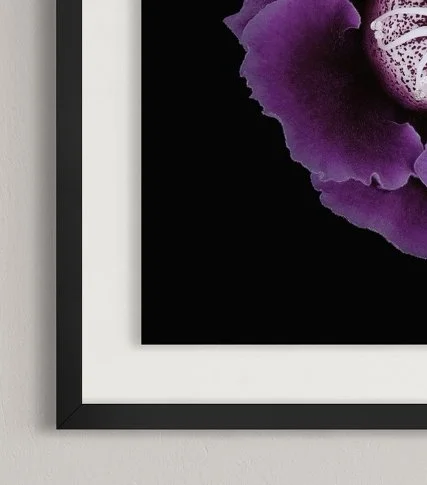
When your print is delivered, you will no doubt want to display it as soon as possible. However, buying a ready-to-hang artwork is not always the best choice, which is why I prefer to sell my work unframed and unmounted. Art is an investment that lasts a lifetime, and taking a few weeks to choose custom framing ensures the final piece matches your vision. A meeting or discussion with a professional framer will help you explore your options and choose materials that complement your artwork and interior design style. Your framer can show you a range of mouldings and advise on the appropriate frame size, the frame material, colour matching, and the choice of mountboard (if required).
Glazing is another important topic to consider, as it protects your artwork from damage. Framers typically offer two options: glass and acrylic. The former is typically available in standard, museum, or conservation grade. Premium grades offer non-reflective finishes and UV protection. Acrylic glass has the advantage of being both light and shatterproof; however, whilst the optical performance of the top brands can be excellent, cheaper acrylics perform less well and can degrade quickly. Seeing how glass and acrylics compare in a frame maker’s studio is an invaluable exercise.
Apart from a lack of advice when buying online, there are some shipping issues to consider as well. Whilst buying over the internet is a convenient and easy option, most couriers and postal services will not insure artwork against breakage if glass is included. Some services will not insure artwork at all. For this reason, larger pieces that are ordered online, typically over 11” x 14”, will almost always include acrylic glass. Framers install this to minimise weight and breakage, but always check that the seller will replace an item themselves if it is damaged prior to receipt. That said the purchase of a framed artwork online will still exclude glass as an option.
As an alternative to traditional framing, you may wish to discuss other options with your framer. For example, "cold mounting" is a process that bonds the art to a rigid backing board. The surface is then sealed with a protective giclée varnish. This can be a lightweight and less expensive option than glazing, but varnish offers less protection than glass and should only be considered for low-traffic areas to avoid tears, scratches, and scuffing.
Presentation is personal, and with a large range of framing options available, a bespoke solution is best. You will have no doubt heard the phrase “Act in haste, repent at leisure”.